
Contributors

Subscribe to our newsletter
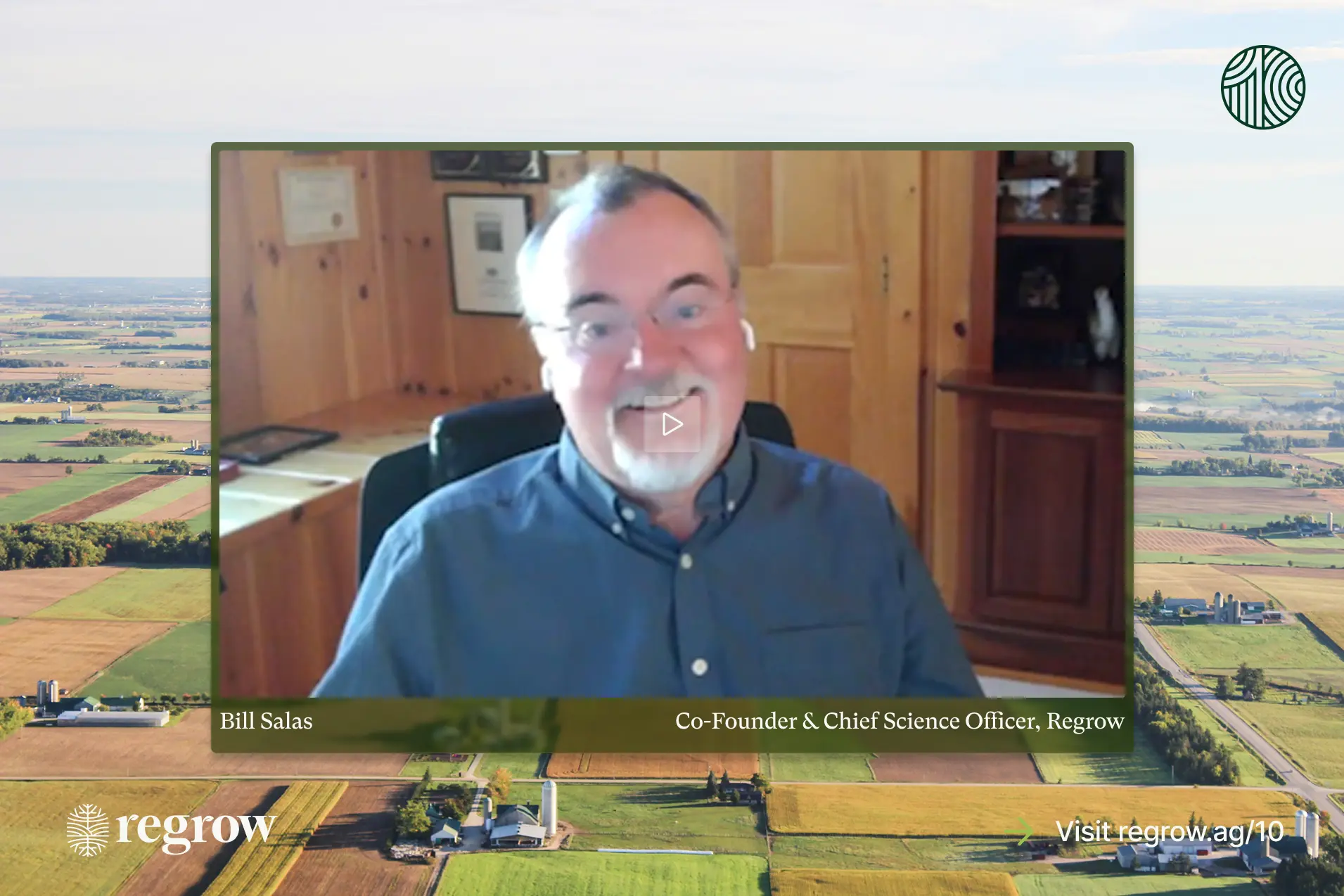
Well before Regrow enrolled a single farmer in a regen ag program (we’re now up to 77,000), Bill Salas was helping build the foundation for scalable, trusted MRV. At the University of New Hampshire he worked alongside Professor Changsheng Li, the architect of DNDC, a biogeochemical model that simulates how farming practices change conditions in the soil, how soil microbes respond, and how those changes affect soil carbon and greenhouse gas emissions.
Following his time at UNH, he went on to found Dagan, taking DNDC out of the lab and into commercial use. Dagan had the science; Anastasia Volkova's FluroSat had the platform to run it at scale. The two merged to become Regrow, and the rest, as they say, is history.
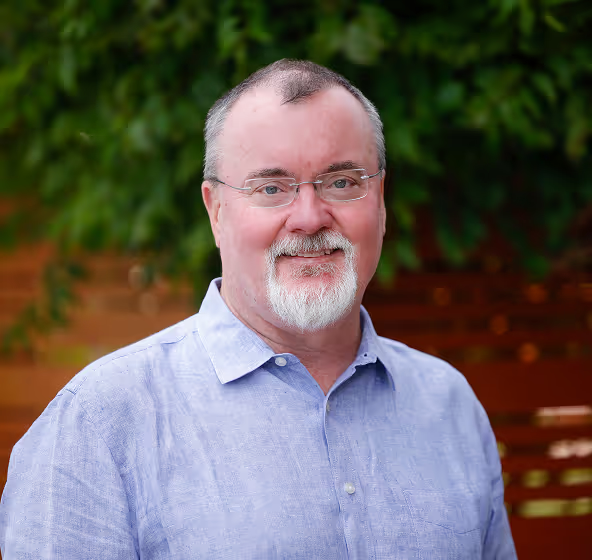
Bill now leads the science team at Regrow, bringing a PhD in natural resources management and 30+ years of experience in soil modeling to our trickiest customer problems.
We asked Bill to look back on what’s changed over the last ten years of measuring and modeling agriculture. As always, he was precise, generous with credit and quick to deliver a relatable analogy.
Turning a research model into a product
DNDC, short for denitrification-decomposition, is built on first principles of biology, physics and chemistry. Professor Li, whom Bill calls a “brilliant scientist,” designed it as a global research tool.
Implementing that science commercially started with a simple question: what is the model for?
"What questions are we specifically trying to answer to enable market value for regenerative ag globally?" Bill said.
Once you know the questions, you know which datasets you need and how to translate the model's detailed output into something farmers, businesses and other stakeholders can use.
Stakeholders don't need to understand every microbial process. They need to see how their choices affect outcomes, in a way that helps them value their programs and keep investing in regenerative agriculture.
Professor Li built the science. Turning his code into software that could run at scale was a separate job. The team re-engineered the code to be far more computationally efficient so it could run inside Regrow's software platform, consistently and reproducibly, at scale.
From "too complex" to "how do we do it best?"
Once the science could run at scale, the next question was whether anyone would trust it. A decade ago, the common view was that agriculture was simply too messy to measure. "Each field is different. Each farmer manages fields differently," Bill said. How could anyone credibly put a number on what practice changes accomplished across an entire supply shed?
That view has shifted. Field measurement of soil carbon stock changes and greenhouse gas emissions has improved, and "better field data leads to better tools and better systems." Today technology can capture agriculture's complexity "with a documented level of accuracy and a well-understood estimate of uncertainty." The industry has come around to the idea that this can be done at scale with high integrity.
It wasn't always this way. Early regenerative programs leaned on simple tools for their estimates, and the market didn't buy it. Many investors sat on the sidelines, waiting for estimates they could trust and an honest account of how uncertain those estimates were.
Markets know how to handle uncertainty
Bill is clear-eyed about what the science can and can't do. The models behind these numbers go through extensive validation, and he's adamant that the uncertainty around them belongs out in the open. "Our estimates of changes in soil carbon or greenhouse gas emissions are estimates. They're uncertain. They're not perfect. But I feel very strongly that market traction requires us to be transparent about the uncertainty."
His reasoning comes from finance. "Markets know how to handle uncertainty," he said. Financial markets are highly uncertain, and yet they work thanks to shared ways of capturing and evaluating risk. Give a market a validated number and an honest measure of how confident you are, and it can price that. It also lets programs be conservative about what they reward, so buyers know they're not paying for more than what happened in the field.
What agriculture has been missing is a rulebook. Investors compare companies by reading profit-and-loss statements built on GAAP, the common accounting standards that make one company's numbers comparable to the next. Agricultural programs haven't had an equivalent. "How do you compare one option versus the other if they don't have the metrics and the evaluation criteria to do so?" Bill asked. Without that comparison, "you end up not making any investments."
Now the rules are becoming clearer. Bill points to the Land Sector and Removals Standard, the Greenhouse Gas Protocol's work and new methodologies in the voluntary carbon market. The next step is harmonization around "how we do evaluations, how we estimate uncertainty in quantifications and how we compare various tools to make informed decisions." Get there, and the investors who have been waiting in the wings can finally make informed decisions and unlock climate finance.
“I’m positive that things are trending in the right direction,” he said.
Same science, smaller fields
The next challenge is ensuring those markets can reach every kind of farmer, not just the biggest.
Whether a farmer works 80-acre fields or plots of two or three acres, the soil processes are the same, Bill says, and so is the science. The hard part is data: getting what you need from a smallholder farmer to quantify outcomes and create value for them, without asking for more than they can realistically provide.
That matters enormously for some crops, with rice as a leading example.
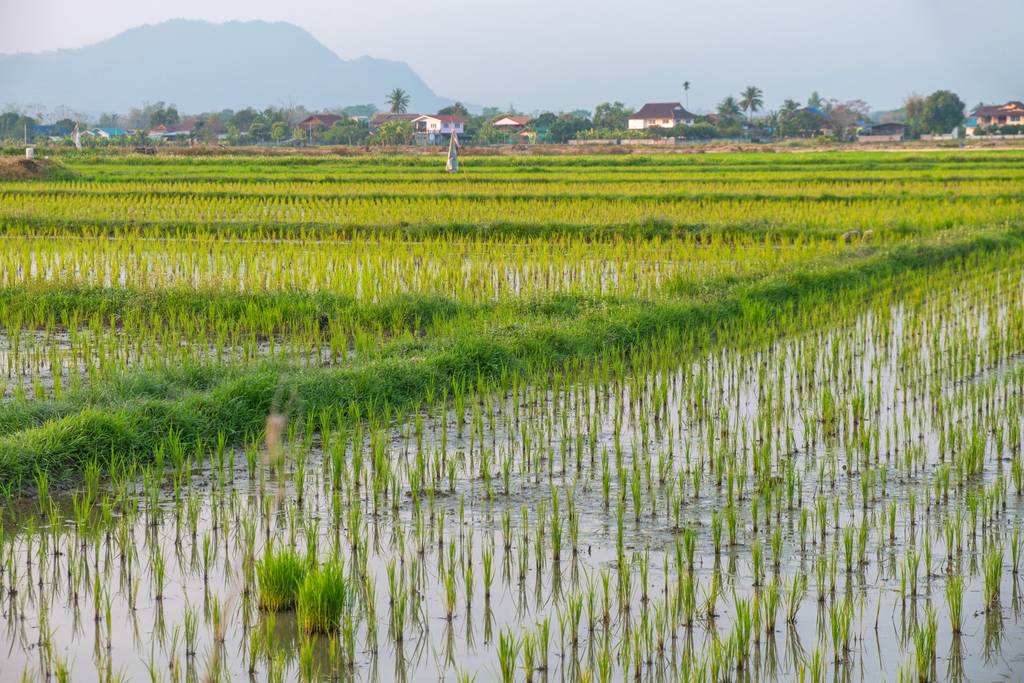
"Globally, smallholder farmers produce almost 80 percent of the global rice production," Bill said. "So if we're going to make a big impact on rice and rice methane emission reductions, we need to engage with smallholder producers."
Regrow has put significant effort into building data infrastructure and MRV systems for smallholder growers. The goal is to help them adopt practices that cut emissions, reward them for it and make the global supply chains more resilient.
Technology is lightening the load. Satellites, including synthetic aperture radar, can now monitor practices on fields of half a hectare or less, which takes much of the data burden off farmers. Bill is also intrigued by new AI tools that collect practice information through a conversation with the grower instead of a spreadsheet. "In concept, I really like the idea," he said.
Smallholders face the stresses of climate change and weather variability head on. Bringing them along, Bill says, "will be beneficial for all."
Public and private, pulling together
No single company can reach farmers at that scale on its own. “It’s really critical to engage with the NGO community, the government agencies in terms of shared goals on what we’re trying to do,” Bill said. With a career that started at NASA and ran through academia, working across that line comes naturally to him.
Regrow’s own story shows what that looks like in practice. DNDC itself was developed with government research dollars. The U.S. Small Business Innovation Research (SBIR) program, which exists to move technology from research into commercial use, then funded work to enhance DNDC for commercial applications. SBIR grants also backed early remote sensing work, including OpTIS, the Operational Tillage Information System, which tracks farming practices across large landscapes.
And the relationship runs both ways. Regrow provides data to the U.S. government’s national greenhouse gas inventory through its OpTIS and Monitor platforms, works with the USDA’s Natural Resources Conservation Service, and collaborates with academic researchers to keep improving the science.
Bill sees these partnerships as both a public good and a strategic asset, and a big part of how Regrow pursues its mission.
Resilience is why regen ag is here to stay
What gives Bill hope for the decade ahead is how the justification for regenerative agriculture is evolving. For most of the past decade, the main driver was sustainability commitments, which have come and gone in waves. Now weather patterns are shifting, with more droughts and more heavy rain events, and it's increasingly clear that regenerative practices create "a much more resilient and stable production system."
That's bringing new people to the table.
"We're now dealing with food and beverage procurement teams that are trying to procure a sustainable supply of the commodities that they need for their products,"
he said. For those companies, regenerative agriculture is now a way to de-risk their supply chains.
Regulation is starting to point the same way. Bill sees more compliance-based drivers emerging. Internationally, methodologies under Article 6 of the Paris Agreement are beginning to reward emission reductions from regenerative practices through carbon trading, a global mechanism he expects to "unlock significant investment to support farmers in that journey."
Ten years ago, the question was whether agriculture could be measured at all. Now it’s how to measure it best, and who to bring along. The science has caught up, the market is learning to trust it, and the people at the table range from smallholder rice growers to global procurement teams. “We’re in a great spot to help support [regenerative agriculture] and scale globally,” Bill said.
Here's to the next ten years.
Learn more about the past and future of regenerative agriculture in our series, A Decade in the Field →