
Contributors

Subscribe to our newsletter
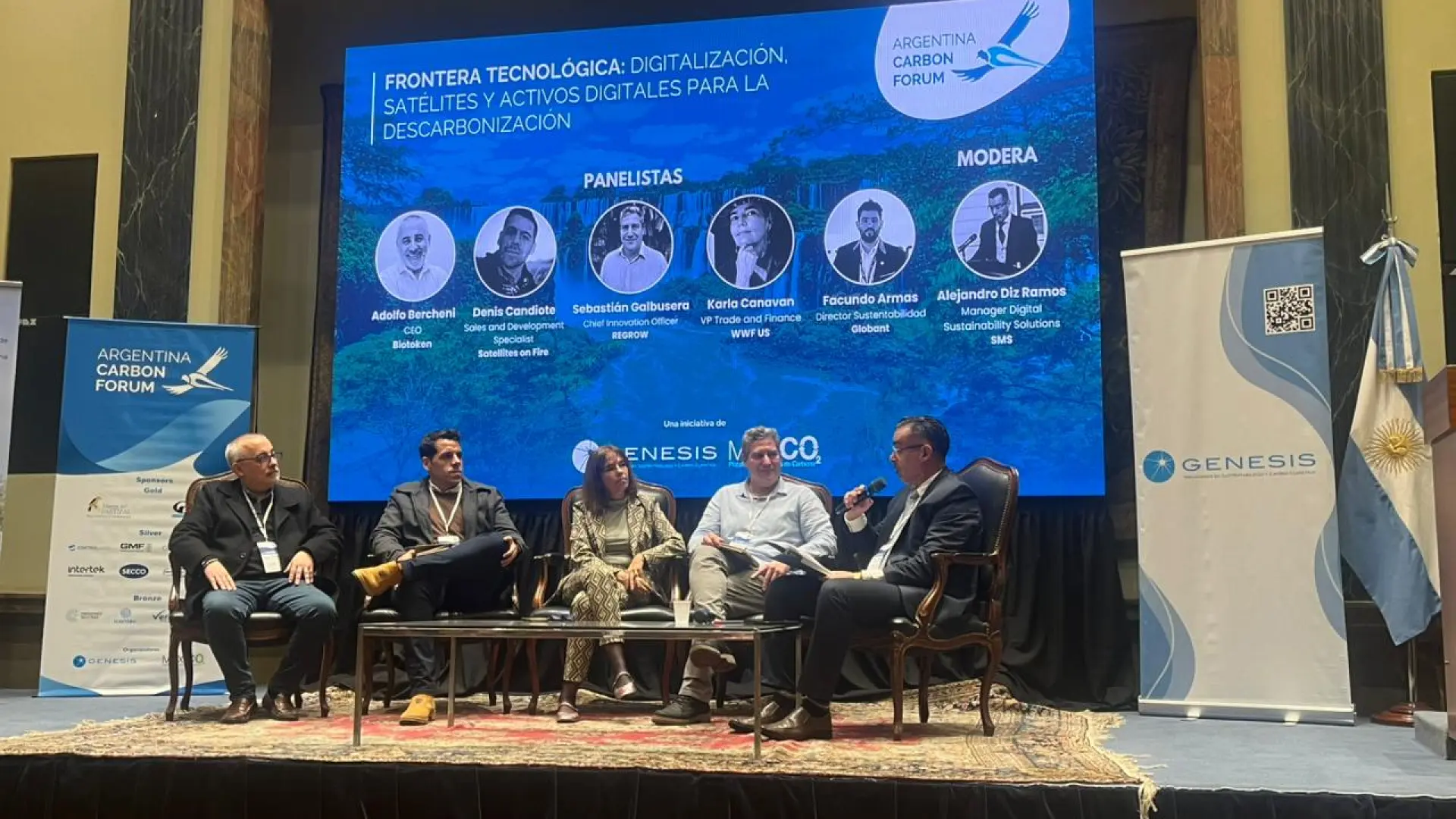
At this year’s Argentina Carbon Forum, building trust in climate markets dominated the conversation.
Across talks with project developers, auditors, consultants, standards organizations, and carbon buyers, I noticed that the market is raising expectations for credibility, scalability and outcome flexibility.
Buyers want transparency, auditors want defensible data, project developers want systems that can scale, and the market is placing greater value on outcomes outside of carbon (like biodiversity and water quality).
As uncertainty remains around carbon credit demand and evolving policy frameworks, confidence in measurement is becoming a requirement for market growth. The organizations best positioned for the future will be those that can turn environmental data into trusted, decision-ready information.
Here are my key takeaways from Argentina Carbon Forum 2026.
1. The market wants to outsource MRV
Across conversations with carbon project developers, sustainability consultancies, and climate service providers, I noticed that organizations want access to high-quality MRV, but many are unable to build those capabilities internally.
Developing and maintaining robust quantification systems requires expertise in biogeochemical modeling, remote sensing, data management, verification processes, and evolving standards. For many organizations, it is more practical to partner with specialized providers than to develop those capabilities themselves.
As a result, I’ve noticed growing demand for independent MRV platforms that can support multiple project types, geographies, and reporting frameworks.
2. Audit-ready accounting is becoming a market requirement
The Latin American market is moving beyond basic carbon accounting.
Organizations increasingly expect quantification systems to produce results that can withstand external review, verification, and audit. This trend reflects a broader shift toward market maturity. As climate claims receive greater scrutiny, credibility becomes a competitive advantage.
The projects most likely to attract investment are those that can demonstrate transparent methodologies, defensible calculations, and clear evidence of outcomes.
3. Our sights are aimed beyond carbon
Project developers repeatedly highlighted growing interest in biodiversity, ecosystem health, and other co-benefits. Several participants referenced standards such as Climate, Community & Biodiversity (CCB) certification as an important component of project value.
This reflects a larger market evolution. Buyers increasingly want to understand not only how a project impacts carbon emissions and sequestration, but also whether it improves ecosystem resilience, supports communities, and delivers measurable environmental benefits.
The future of MRV will likely require the ability to quantify multiple outcomes.
4. The carbon market still faces significant uncertainty
Despite continued activity, many participants expressed concerns about the pace and direction of carbon market development.
Several challenges were raised repeatedly:
- Uncertainty around future demand for carbon credits
- Slow development of international market rules
- Limited growth in carbon prices
- Difficulty predicting which project types buyers will prioritize in the future
This uncertainty makes long-term planning difficult for project developers and investors alike.
At the same time, integrity expectations continue to rise. Buyers increasingly favor projects that can demonstrate strong governance, transparent methodologies, scalability, and clear social and environmental safeguards.
5. LATAM has an opportunity to develop infrastructure and build integrity
Latin America is becoming one of the most important regions for climate-smart agriculture and nature-based solutions. The region combines agricultural scale, strong producer networks, growing corporate demand, and increasing interest from investors and carbon buyers.
Throughout the forum I noticed a growing need for infrastructure. Many organizations are looking for trusted partners to help quantify outcomes, support verification requirements, and scale programs across large agricultural landscapes.
As climate markets continue to evolve, Latin America's opportunity may not simply be to develop more projects. It may be to lead the next generation of measurable, high-integrity environmental outcomes.
Looking ahead
I’ll put it simply: the organizations that succeed in the next phase of MRV will be those that can turn complex environmental data into trusted, decision-ready information at scale. This will build trust in the market and across key stakeholders, and will accelerate demand and market mechanisms for agriculture resilience at a global scale.