



Subscribe to our newsletter
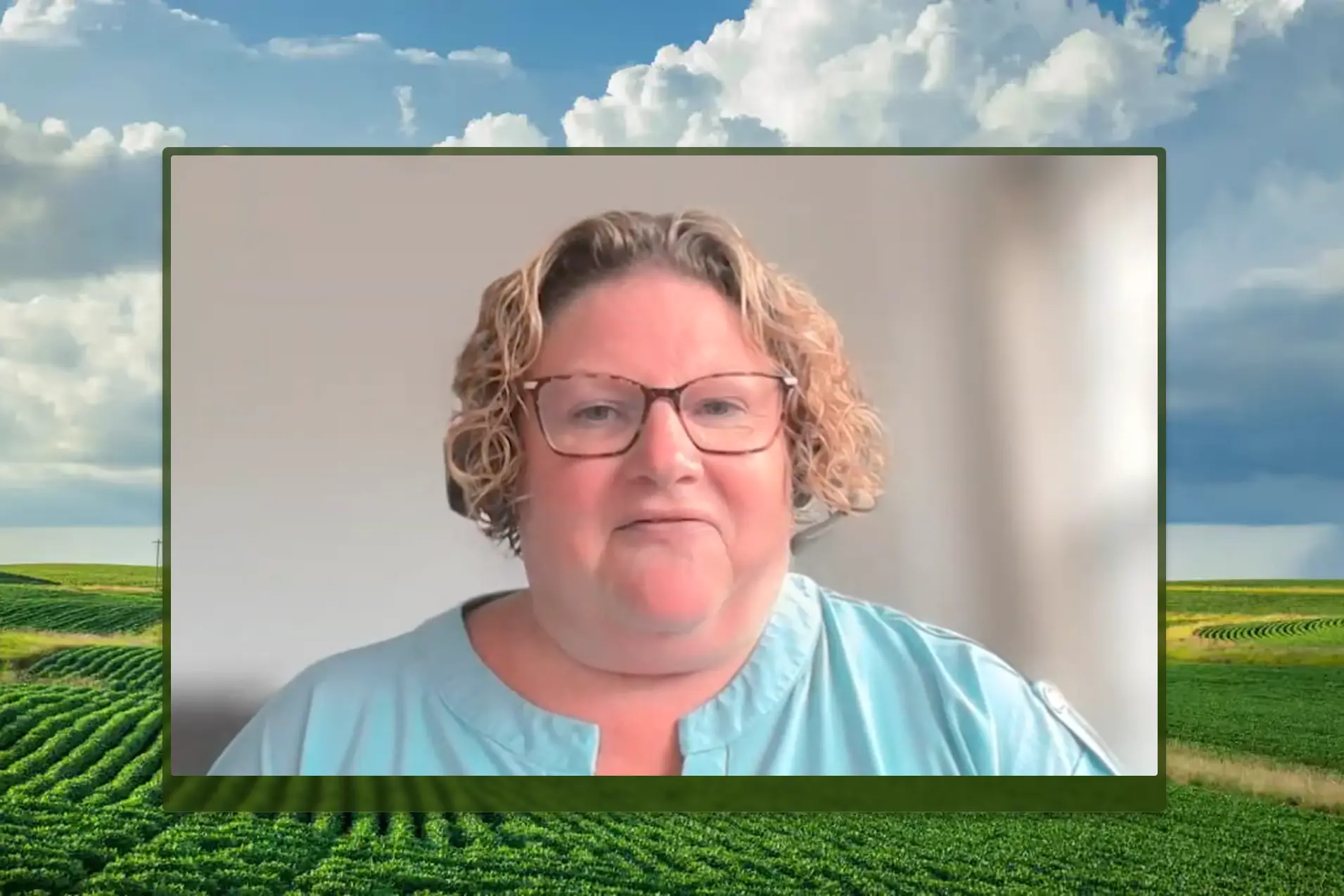
Erin Augustine came to sustainability leadership by navigating complex global supply chains, from footwear and apparel to food and agriculture. Before joining Oatly, she led responsible sourcing at Wolverine Worldwide and ran sustainability for Kellogg's global operations, with earlier stops in environmental education, nonprofit work, and consulting along the way.
As Oatly's VP of Global Sustainability, she's helped the company qualify as a Climate Solutions Company under the Climate Solutions Framework (CSF), created by the Exponential Roadmap Initiative. To qualify, Oatly had to show that at least 90% of its revenue comes from climate solutions products, meaning products with at least 50% lower climate impact than the relevant market comparison, as well as a public near-term greenhouse gas emissions target and a net-zero target covering all emissions.
Erin's work at Oatly sits at the intersection of two functions that have become increasingly intertwined over the last decade: sourcing and sustainability. Our conversation covered why regenerative agriculture has become a matter of supply chain resilience rather than brand differentiation, how Oatly structures procurement and sustainability to work as one team, and what she's learned about what actually moves people to change how they eat.
The supply chain math has changed
Erin started our conversation from a blunt premise: the food system is both a major driver of climate change and one of its biggest potential casualties. It's responsible for roughly a third of all human-caused greenhouse gas emissions, and it's already absorbing the consequences of climate change: extreme weather patterns and climate events that threaten yields, sourcing regions, and supply continuity. That double materiality is why, in her view, regenerative agriculture is so important. "The shift has gone from regenerative ag being a nice-to-have... to a need-to-have," she said.
Part of what's changed is that old sourcing fallbacks won’t work for long. A company facing a bad harvest used to be able to shift sourcing elsewhere; today, climate volatility is widespread enough that there’s not always a reliable "elsewhere" to shift to. A more durable answer, Erin argues, is building resilience into the supply base a company already has. "We need to build resilience in all of our existing supply chains so that they will be able to weather these climate shocks today and in the future," she said.
Regenerative agriculture must be treated as a cross-functional strategy
If regenerative agriculture is now core to supply chain strategy, Erin believes it can't live solely inside a sustainability team that hands its plans off to sourcing. At Oatly, part of the sustainability function is embedded directly inside the sustainable operations team. They sit in the same reporting structure as sourcing, with program design and sourcing operating as sub-teams within a unified function.
That structure exists because, in Erin's experience, sequential handoffs for regenerative programs lose their effectiveness over time. "If we have shared accountability, aligned objectives, and a clear decision-making process together, then that's much more effective than relying on a sequential handoff," she said.
Shared ownership also solves a more practical problem: a regenerative ag strategy designed in isolation can end up working against the company's own sourcing strategy without anyone noticing until it's too late. That's why sustainability needs visibility into sourcing early in program development. "We need to know from the sourcing team their sourcing strategy, their supplier plans, their volume forecasts early in the process," Erin said.
Getting there takes more than a shared reporting line though. Sourcing and sustainability, she noted, tend to develop their own jargon, and a regenerative program can quietly fracture if the two sides aren't aligned on their goals, program design and outcomes. "Developing a shared language and making sure that we're talking about our program in the same way... is super important," she said.
Shared accountability isn't the same thing as shared ownership of every task, and Erin is careful to draw that distinction. "We also need to be clear of, within that shared space, who owns what. You don't want to just say, well, everything is both of our responsibilities," she said.
Risk must be shared across the supply chain, not just with farmers
Oatly isn't vertically integrated, which means its regenerative programs depend on a three-way relationship between the company, its mills and its growers. In this structure, the mill serves as the critical link between Oatly and the farmers actually changing their practices. Erin credits much of the company’s progress in regenerative agriculture to growers and suppliers willing to build programs collaboratively rather than simply comply with a set of requirements.
Erin also highlights a key facet of Oatly's approach to regenerative agriculture: the company’s role in supply chain relationships goes beyond a typical sourcing contract. "Our role is not just to source oats. Our role is to work with the growers on practices that will help improve their overall farm resilience," she said.
Underpinning all of Oatly’s work is a shared-risk model, which is core to scale today: Oatly offsets the cost of adopting a new practice so growers can test it without absorbing the full financial uncertainty themselves. This approach mirrors the same logic Erin applies to supply chain resilience more broadly: by approaching programs at the ecosystem level and sharing risk across contributors, we can establish lasting change that’s both environmentally and financially sustainable for all parties.
Optimism, taste, and what scale actually looks like
Oatly recently released a report, "From Insight to Impact," built from interviews with 29 experts across the food system, alongside a poll of roughly 12,000 consumers across seven global markets. Two findings in that report reflect her takeaways about the evolution of regenerative ag, and what the future may look like.
First, pessimism doesn't move people. Fear and guilt aren't an appropriate lever for change. "You don't change the world through shame and guilt... you change the world through optimism," she said, pointing to survey data showing that 80% of people globally say the future of the food system matters to them, even though many feel isolated in that concern. Activating those consumers is, in her view, one of the biggest untapped opportunities in the industry.
Second, food decisions are deeply emotional and cultural, not purely rational. Change tends to happen through food that's delicious and culturally relevant first, and sustainable as a byproduct, rather than the other way around. Making the more sustainable option the default choice, she added, matters too, since it removes the decision fatigue that otherwise gets in the way of adoption.
Self-sustaining programs and landscape-level collaboration are key to program scale
When asked what distinguishes organizations that manage to scale regenerative programs rather than stall out, Erin pointed to a few consistent traits
- Practices that growers keep using even after the financial incentive goes away
- A shift from a compliance checklist to a self-sustaining system
- Programs designed so that initial investment can transition to a more financially sustainable effort for businesses
Erin also emphasized collaborating with partners at the landscape level. Since most crops are grown in rotation, meaningful progress increasingly requires collaboration across ingredients and brands.
For companies just starting this work, her advice circles back to where the conversation began: get sourcing and sustainability speaking the same language, bring suppliers into the room together rather than sending them mixed signals, and make sure sourcing teams understand the regenerative data well enough to see its value themselves.
Learn more about the past and future of regenerative agriculture in our series, A Decade in the Field →
.webp)
.webp)