


Contributors
Subscribe to our newsletter
Partnerships are the path to scale
Regenerative agriculture has entered a new phase of maturity. After years of isolated pilots and single-buyer programs, the industry is seeing rapid growth in collaborative investment, with companies recognizing that the challenges they face (climate volatility, declining soil health, supply chain uncertainty, and shifting disclosure requirements) cannot be solved by acting alone. Partnerships offer a way to share program resources, minimize stranded assets and scale impact.
Collaboration brings a range of advantages: the ability to reach more farmers, improve data quality through shared systems, and create consistent incentives to support long-term practice adoption. But despite the benefits, many organizations struggle to turn enthusiasm for collaboration into concrete action.
This guide outlines the partnership models that work, grounded in real programs Regrow has helped design and run over the past decade. You’ll learn how to establish new partnerships and strengthen existing ones to maximize impact and build resilience in key supply regions.
The Two Most Impactful Partnership Models We’ve Seen
Successful programs typically approach regenerative agriculture collaboration through one of two models. Choosing between them depends on your sourcing footprint, goals, and internal capabilities.
Landscape Level Partnerships
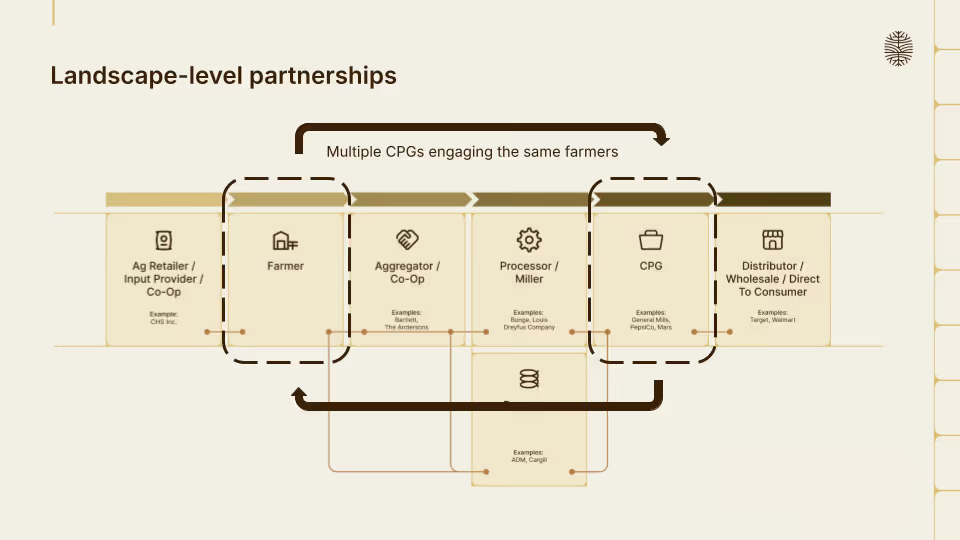
Landscape level partnerships emerge when multiple companies work within the same region across multiple crops. This model makes sense when several buyers engage the same farmers, or when environmental concerns and potential outcomes extend across crop rotations and supply chains.
Consider a Midwest sourcing region where farmers rotate corn, soy, and winter wheat. A food company sourcing corn, a biofuel producer sourcing soy, and a milling company sourcing wheat may all rely on the same group of growers while operating separate sustainability programs. In a landscape-level partnership, each buyer can focus on outcomes tied to its own crop, while jointly investing in practices that deliver benefits across the full rotation, such as cover cropping, reduced tillage, or nutrient management. The result is shared progress without asking farmers to enroll in multiple, overlapping programs.
The advantage of this approach is alignment. By pooling investments, companies can offer growers a single, coordinated program within a region. This drives deeper change, lowers total program costs, and delivers shared environmental gains, while also simplifying enrollment and participation for farmers.
However, this level of collaboration requires careful attention to governance, data sharing, and role definition. Partners may have different motivations or reporting requirements, and without explicit coordination across the supply chain, it can be difficult to demonstrate sufficient traceability to support company-specific claims. Clear agreements on data use, attribution, and reporting boundaries are therefore essential to make landscape-level programs both scalable and credible.
Supply Chain Partnerships
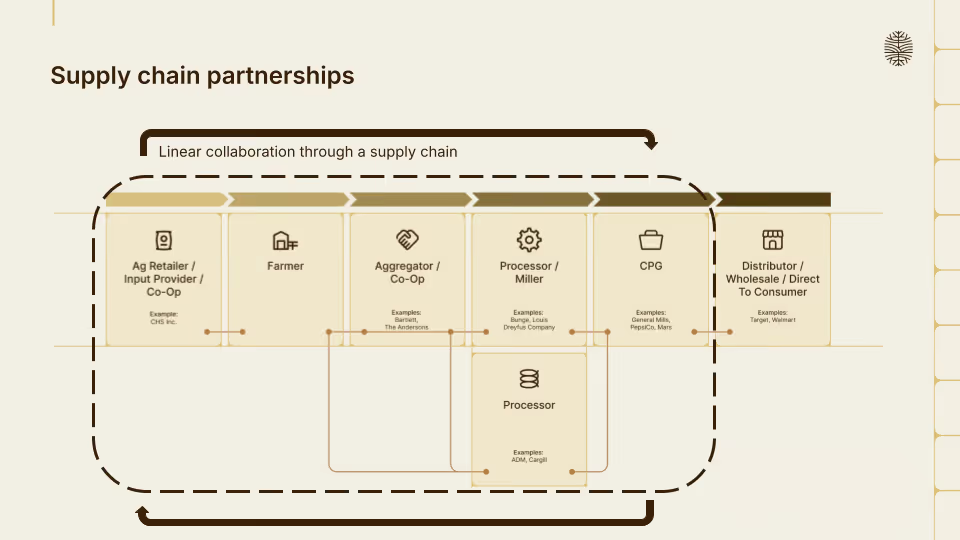
Supply chain partnerships, on the other hand, are centered on collaboration within a single supply chain. These programs are often initiated by a CPG or processor that has specific needs in program design, traceability, and reporting. They tend to involve fewer partners, and in some cases they can move more quickly from concept to implementation.
Supply chain partnerships work best when traceability is already established or is feasible to build, and when there is an opportunity to deepen existing supplier relationships. Fewer partners also means greater agility through simpler consensus building. Program requirements, incentives, and MRV systems can be aligned without negotiating across multiple corporate strategies.
Still, success depends on shared understanding of data expectations, program responsibilities and flexible farmer engagement. In a supply chain partnership, programs have limited influence over farmer decisions in years when the sourced commodity is not in production. Clear coordination and program design are essential to reduce the risk of inconsistent grower practices. Above all else, suppliers and growers need to be given clear expectations
Engaging Partners and Structuring Collaboration
Engagement strategies will differ depending on whether a partnership is landscape level or supply chain specific, but the underlying questions are the same: What do partners want, what do they need, and where are objectives aligned?
Landscape Level Programs
When engaging in a landscape-level effort, the first step is identifying which regions matter most to your organization and why. Sourcing volume, environmental sensitivity, and potential for impact often guide these decisions. It’s also important to clarify whether your organization intends to lead the program or join an existing effort. Some partners prefer to shape program structure from the ground up, while others are comfortable contributing funding and expertise while a neutral entity manages coordination.
A common starting point looks like this: a nonprofit or convening organization anchors a multi-state program focused on a priority growing region where multiple crops are produced, including corn, soy, wheat, and oilseeds. Rather than centering the program on a single buyer, the initiative is designed to provide a shared emissions and sustainability baseline across the region. Food companies, processors, and other value chain actors participate as co-investors, aligning around a common measurement framework while retaining flexibility in how they use the data internally. Regrow is working on several projects just like this.
In this model, early engagement focuses on defining shared goals. For example,
- Inventory-level emissions accounting (rather than credit generation)
- Agreeing on geographies and crops
- Clarifying roles across the ecosystem, from farmer outreach and technical assistance to data collection and reporting.
- Upfront decisions on cost-sharing models and reporting expectations
Understanding who else sources from the region helps identify natural allies. Pre-competitive collaboration can be especially powerful when partners face similar pressures from regulators, customers, or internal climate targets. When expectations around governance, data use, and timelines are clearly established early, landscape-level programs are better positioned to grow steadily while maintaining credibility.
Supply Chain Programs
In a supply chain model, durability matters. Strong, long-standing relationships can make it easier to align incentives, negotiate multi-year commitments, and integrate new data systems. You might begin by considering which suppliers already participate in sustainability programs or where there is openness to regenerative agriculture. Co-investment becomes central to the conversation: who benefits from the claimed outcomes, and how should program costs be split?
Supply chain partners also need clarity on what results matter most, whether that’s compliance with emerging regulations, progress against a climate target, traceability improvements, or supply stability. Aligning on shared success metrics is essential.
Finding the Right Programs to Join or Build
Whether a company wants to start its own program or join an existing one, it’s essential to understanding the regenerative programs that currently exist, and how other stakeholders in the industry are identifying programs and/or partners.
This early discovery phase is where internal champions are made. By mapping activity against your own sourcing priorities and sustainability objectives, it becomes easier to identify the partnership model that fits your goals.
Clarifying Your Role in the Partnership
Regenerative agriculture programs succeed when each participant understands their responsibilities and how they connect to the broader system. Though every program looks different, the required roles tend to be consistent.
A program typically includes:
- Entities that sponsor and fund the work
- Organizations that handle documentation and manage auditors
- Teams that coordinate partner communication and track progress
- Partners that recruit and support farmers in practice adoption.
Sometimes a single organization may play multiple roles.
Technical assistance providers must understand not only agronomy but also the boundaries of program rules, while data entry support personnel help reduce friction for farmers navigating new digital tools.
On the back end, a MRV and quantification partner ensures the right data is collected to meet program reporting needs. They should also manage data flows from farmer interfaces, through outcome modeling, and into corporate inventories or sustainability reports.
These functions depend on one another. For example, farmer recruitment cannot be effective without a clear value proposition; quantification cannot be credible without strong data collection processes.
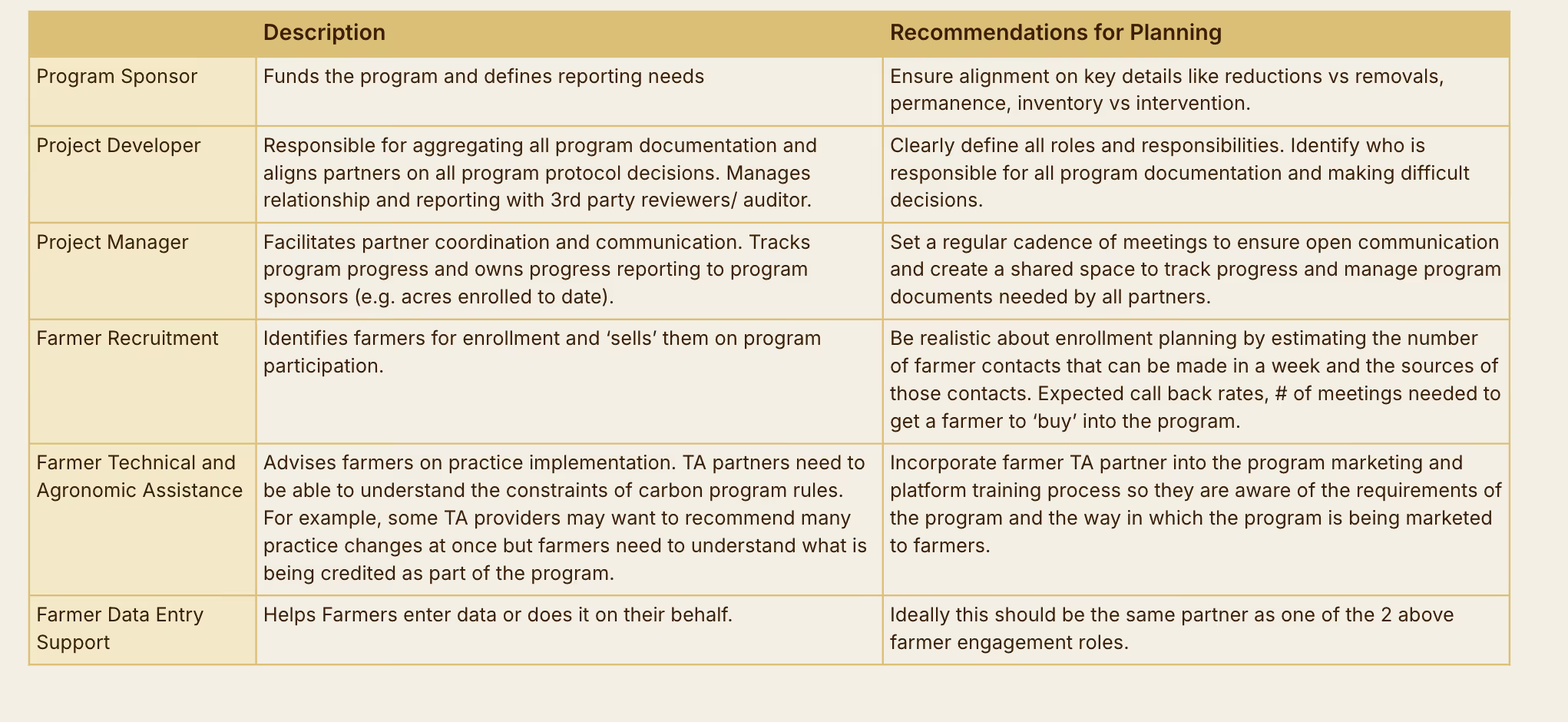
When determining your place in a partnership, consider your organization’s core competencies. Perhaps you know that your company is a strong program sponsor — you typically fund programs and build them based on your reporting needs. It’s important, then, to get alignment on key reporting details early in the program, so you and your implementation partners can develop a program that will meet your needs.
The chart below outlines key responsibilities for different actors in a regenerative ag program. Review this chart and discuss other responsibilities before engaging in a program.
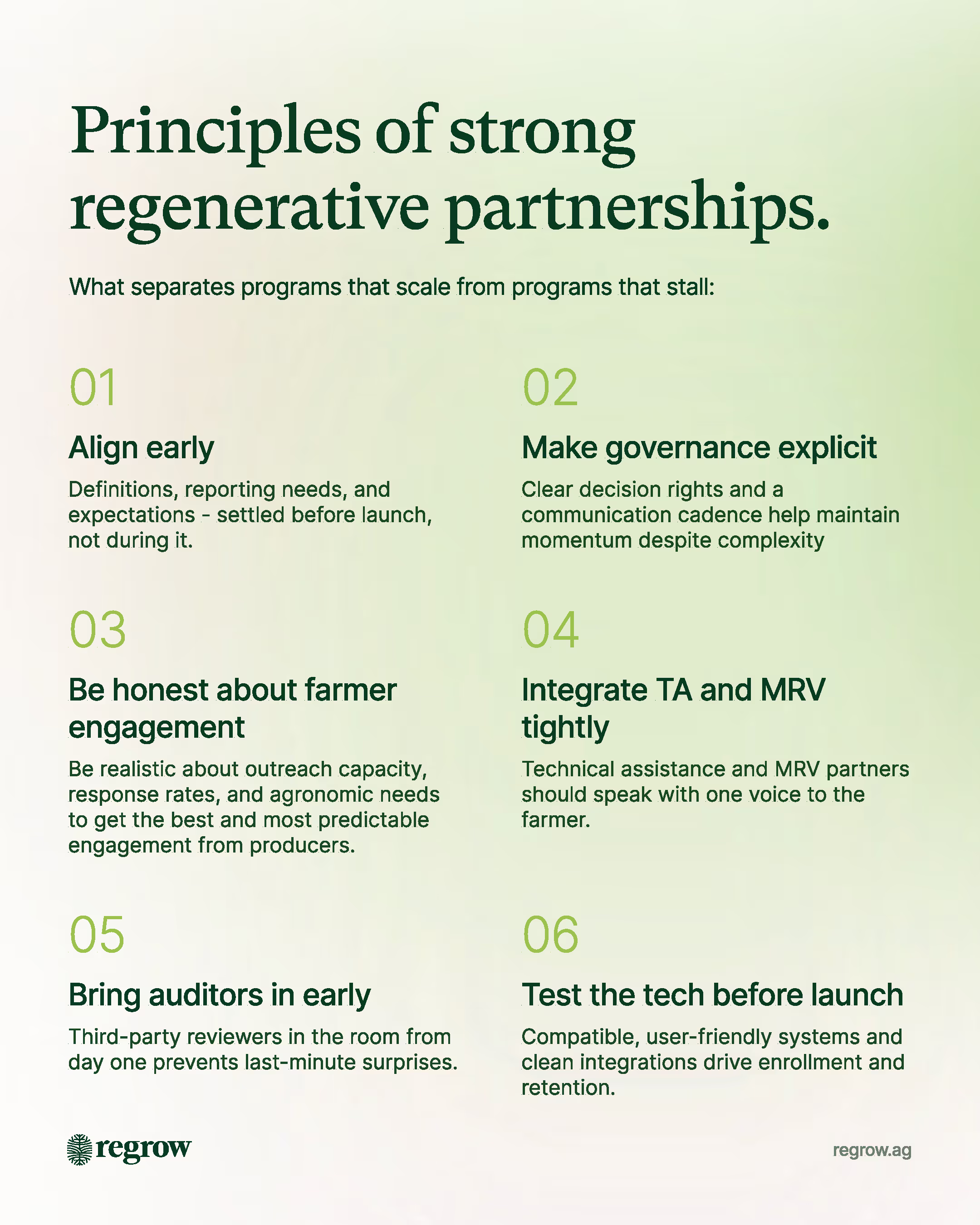
Bringing It All Together: Principles of Strong Regenerative Partnerships
Although every partnership is unique, several principles consistently distinguish successful programs. Early alignment on definitions, reporting needs, and expectations prevents confusion later. Clear governance, especially around decision-making and communication cadence, helps partners navigate complexities without losing momentum.
Farmer engagement must be grounded in realistic assumptions about outreach capacity, response rates, and agronomic needs. Technical assistance and MRV partners should be tightly integrated so farmers receive consistent information. And because regenerative agriculture programs often involve third-party reviewers or auditors, including them early in the process reduces the likelihood of last-minute surprises.
Programs function best when the technical systems are compatible and user-friendly. Testing data integrations and MRV workflows ahead of launch ensures farmers don’t face redundant or confusing processes. The more seamless the experience, the higher the enrollment and retention.
Strengthening Internal and External Coalitions
Partnerships begin inside the organization. Identify internal stakeholders whose support would accelerate your regenerative ag strategy, including procurement leaders, finance teams, sustainability officers, or brand executives. Consider what would convert them from skeptics to champions: financial justification, peer examples, risk mitigation evidence, or supplier testimonials.
Externally, mapping your value chain reveals opportunities for collaboration you may not have considered. Your influence extends only so far within your direct sourcing network, but co-ops, processors, retailers, and even competitors may share your goals. Understanding where influence is high but action has been limited can uncover new pathways for partnership.
A Framework for Moving Forward
As you bring these elements together, revisit three core questions:
- Which partnership model — landscape level or supply-chain — best supports your goals?
- Which roles are you best positioned to play, and who can fill the remaining gaps?
- Which partners should you engage now to build momentum for the next phase of your regenerative agriculture strategy?
Answering these questions provides a practical foundation for building programs that are credible, scalable, and resilient. These programs are most likely to be capable of delivering the environmental and economic outcomes companies need today.
6 Principles of Strong Regenerative Partnerships
Want a quick refresher on establishing robust partnerships? Download this cheat sheet and keep it handy as you design programs with new or existing partners.
Interested in learning more? Email hello@regrow.ag for help designing your program.